
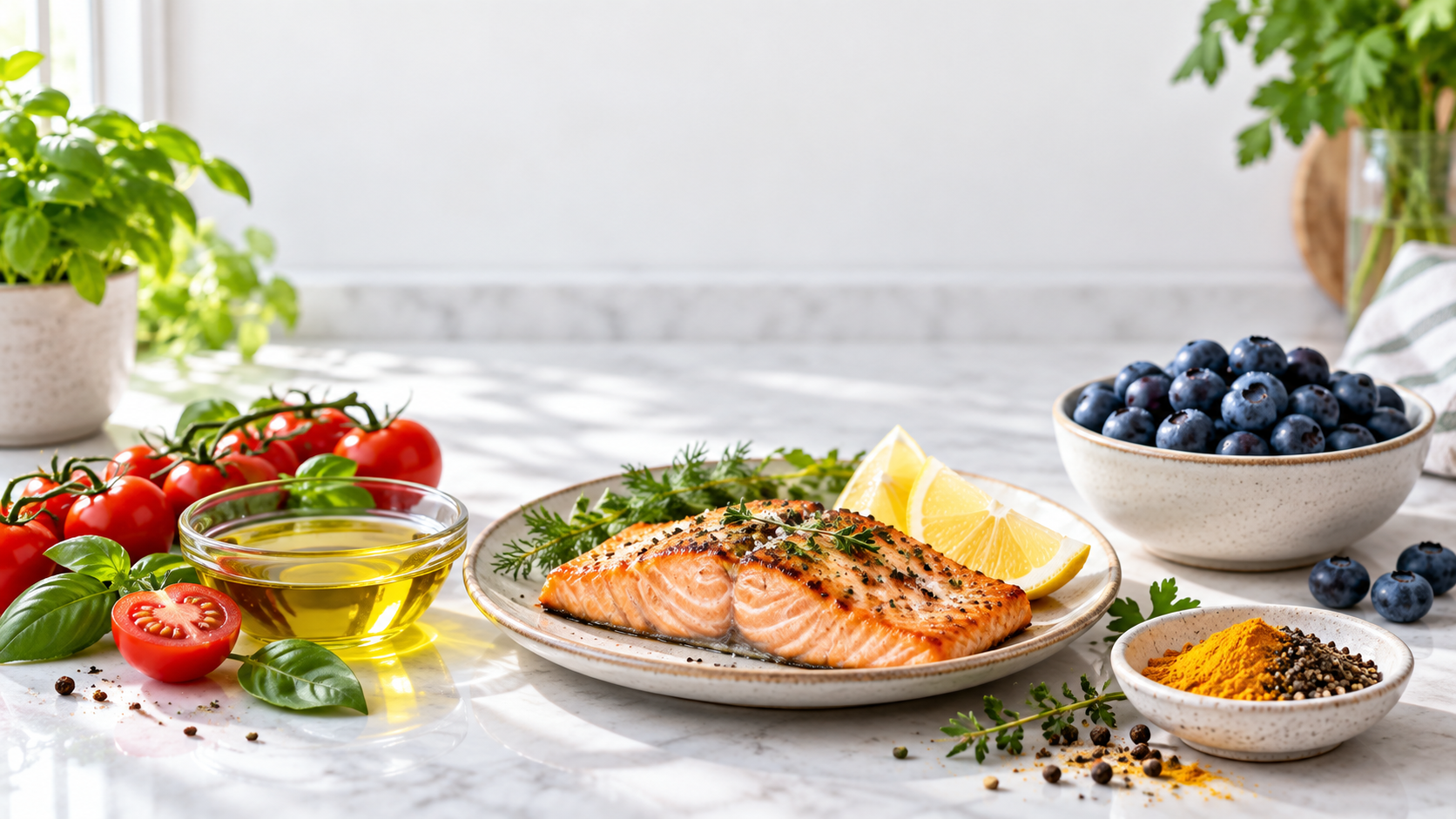
Looking for anti-inflammatory foods after 60? Start with the honest answer: no ingredient can switch inflammation off or guarantee faster workout recovery. But a varied eating pattern can make it easier to build nourishing meals, and four familiar ingredients are especially practical to cook with: fatty fish, blueberries, extra-virgin olive oil and turmeric.
This guide explains what the evidence does and does not show, then gives you a practical starting point: four clear recipes with ingredients, timing and useful swaps. They are meal ideas, not treatments. Your sleep, activity, health conditions and medications also shape how you feel and recover.
Quick answer: four foods to put to work
- Fatty fish: salmon and trout supply protein and EPA/DHA omega-3 fats. Try the lemon salmon tray bake.
- Blueberries: fresh or frozen berries add fruit and fiber. Try warm blueberry-lemon yogurt bowls.
- Extra-virgin olive oil: an unsaturated fat that works in dressings and cooking. Try the chickpea farro bowl.
- Turmeric: a flavorful spice for soups and vegetables. Try turmeric red lentil soup with black pepper.
The point is not to eat all four every day. Choose what fits your appetite, budget and any advice you have received from your clinician.
First, what does inflammation mean?
Short-term inflammation after exercise, infection or injury is part of normal biology. Persistent inflammation is more complicated and can have many causes. A change in one lab marker does not automatically mean a person will feel better, perform better or avoid disease.
When a video makes a dramatic percentage claim, ask who was studied, what dose was used, how long the study lasted, and whether it measured a blood marker, a symptom or a real-world health outcome. A concentrated supplement study is not the same thing as cooking with a spice.
The bigger win is the eating pattern
The American Heart Association describes Mediterranean-style eating as a flexible pattern centered on vegetables, fruits, whole grains, beans and legumes, with foods such as fish, nuts and olive oil. It is the combination and the everyday swaps that matter more than a single “superfood.” Other balanced patterns can work too.
For active adults, food is only one part of the picture. The National Institute on Aging explains why strength training matters as we age. A meal cannot replace movement, sleep, recovery time or treatment for a medical condition. New to resistance exercise? Our beginner three-day strength plan gives a practical place to start.
Four foods and recipes worth trying
1. Fatty fish, including salmon
Salmon, sardines, trout, herring and Atlantic or Pacific chub mackerel provide EPA and DHA omega-3 fats. The NIH Office of Dietary Supplements summarizes guidance to eat seafood as part of a balanced diet, especially when it replaces less nutritious choices. That is not a promise of faster muscle recovery and does not mean everyone needs an omega-3 pill. Species matter: FDA fish advice distinguishes Atlantic and Pacific chub mackerel from king mackerel.
Wild and farmed salmon can both provide protein and omega-3s; amounts vary. Pick a fish you enjoy and can afford. For a complete dinner, roast it with potatoes and broccoli. Other proteins can fit the pattern when fish is not for you.

Cook it: Easy lemon salmon tray bake with potatoes and broccoli.
2. Blueberries
Blueberries add fruit, fiber and colorful anthocyanins. A 2019 review of small randomized trials reported promising signals for some cognitive measures, but the studies included different age groups and varied in methods. A 2026 trial in 57 older adults found no improvement in cognitive tests or its primary brain biomarkers after 24 weeks of freeze-dried blueberry powder. The evidence is mixed; blueberries have not been shown to prevent dementia, treat chronic inflammation or reliably speed recovery.
Fresh and frozen berries both work in everyday meals. A quick compote over plain yogurt gives you a warm topping without turning fruit into a medical protocol.

Cook it: Warm blueberry-lemon yogurt bowls with walnuts. For a make-ahead version, see our blueberry green tea overnight oats.
3. Extra-virgin olive oil
Olive oil supplies unsaturated fat and is a familiar part of Mediterranean-style meals. In the PREDIMED trial, researchers studied a whole Mediterranean eating pattern supplemented with extra-virgin olive oil or nuts. The findings do not mean a spoonful of oil by itself works like a prescription medicine. A dressing is a delicious, practical way to use it; other unsaturated oils, nuts and seeds can also fit a healthy pattern.

Cook it: Chickpea farro bowls with olive oil-lemon dressing. For more ideas about building a balanced plate, read our beginner plate-method guide.
4. Turmeric, with black pepper for flavor
Turmeric brings warmth and color to soups, lentils and vegetables. Cooking with the spice is different from taking a concentrated curcumin supplement. The National Center for Complementary and Integrative Health says early knee-osteoarthritis research is promising but higher-quality studies are needed; evidence is insufficient for many other uses.
The often-repeated claim that black pepper boosts curcumin absorption by 2,000% comes from a small short-term study in young men using 2 grams of curcumin and 20 milligrams of piperine. It did not test a pinch of pepper in food, workout recovery, pain relief or long-term safety. More absorption is not automatically better: NCCIH reports liver injury with some high-bioavailability curcumin products. Ask a clinician or pharmacist before using concentrated products, particularly if you take medication.

Cook it: Simple turmeric red lentil soup with spinach and black pepper. The pepper is there for taste, not a claimed treatment effect.
A simple way to build your plate
Start with a protein you like. Add vegetables or fruit, a satisfying carbohydrate such as potatoes, oats, rice or beans, and a source of unsaturated fat. The budget-friendly protein guide has alternatives to fish, while our recipes above show how these ingredients can come together in real meals.
There is no requirement to buy specialty products or follow a rigid menu. Choose meals that suit your culture, budget, appetite and any medical advice specific to you.
Common questions
Are these foods a cure for inflammation?
No. They can be part of a nutritious eating pattern, but none has been shown to cure chronic inflammation or replace an evaluation of persistent symptoms.
Do I need turmeric or omega-3 supplements?
Not based on this list. Supplements may be appropriate for specific reasons, but decisions depend on your health history and medications. The FDA advises discussing supplement benefits and risks with a health professional. Do not stop or change a recommended medicine or supplement because of a food video.
The takeaway
Fatty fish, blueberries, olive oil and turmeric can all have a place on the menu. Their value is practical: they help you make varied, enjoyable meals. The wider pattern of adequate nourishment, movement, sleep and recovery time matters more than a miracle ingredient.
This article is general educational information, not personal medical advice. Seek care for unusual, worsening soreness, new weakness or other concerning symptoms.
Sources
- American Heart Association: Mediterranean-style eating
- National Institute on Aging: Strength training and aging
- NIH Office of Dietary Supplements: Omega-3 fatty acids
- FDA: Advice about eating fish
- 2019 blueberry trial review and 2026 older-adult blueberry trial
- PREDIMED Mediterranean diet trial
- NCCIH: Turmeric usefulness and safety and 1998 piperine-curcumin study
- FDA: Dietary supplements
Leave a Reply